https://www.youtube.com/watch?v=WJnP9pq6Jnk
HANDKE & BECKETT'S KRAPP ON U=TUBE
lots of reviews and some photos at:
HANDKE & BECKETT'S KRAPP ON U=TUBE
Marie Colbin liest Peter Handke
- by MarieColbin
- 7 videos
- 57 minutes
Marie Colbin liest "Bis dass der Tag euch schiedet" von Peter Handke. Im Rahmen der Festwochen Gmunden 2010.
lots of reviews and some photos at:
http://www.handkedrama3.scriptmania.com/custom3_1.html
http://www.youtube.com/watch?v=W6QjMyn5xjE
http://www.youtube.com/watch?v=oHY4IzeB7ss
Comments Spring 2011
I have a page devoted to German reviews of
TILL THE DAY/ BIS DASS DER TAG
at the handke-drama3.scriptmania site
and at the handke-drama.blog
and lots of photos of German productions at
the handke-photo-drama-picasa album
among the links below is one to
Handke’s ex-lover Marie Colbin, who just won’t let go, performing a section of it. Also to the U. of Chicago Press who distribute the English tri-lingual - French, German, English - edition of the book and to the Suhrkamp edition
ALL ON PAGE 2
The Hub, the Navel to Todos Handke!
http://picasaweb.google.com/
http://picasaweb.google.com/
http://handke-magazin.
http://www.handke.scriptmania.
http://handke-watch.blogspot.
http://handke-drama.blogspot.
http://handke-discussion.
http://handke-trivia.blogspot.
http://handke--revista-of-
http://handke-scholar.
http://handke-yugo.blogspot.
http://www.handke.scriptmania.
COLBIN:
U. OF CHICAGO:
SUHRKAMP VERLAG:
==========
PETER HANDKE’S
TILL THE DAY SUNDERS YOU TWO
as I would translate a title whose German you -"euch” - is in the plural, the dual to be specific, which duality the text references and is a form that exists in Slovenian, is an actress’s monologue, a mouthful for sure, quite verbose compared to Beckett’s near mono-syllabic KRAPPS LAST TAPE - appr. 4,500 spoken words to KRAPP’S 1,500 - to which it claims to be “an echo,” and to which I will comment below in baby portions, the first babies herewith, a text that Handke wrote in 2008. DAY is also the second play that Handke wrote originally in French and then translated or also wrote in German, the first being the quite wonderful LA CUISINE, with his Serbian director friend, Matric, and amazingly this delightful paean to, among other goodies, Serbian Ham [!] has not been done in the English.
Handke’s Afterword to TILL THE DAY states::
“TILL THE DAY is a reply to Beckett’s KRAPP’S LAST TAPE? An echo, rather. An echo, now distant in both place and time, now quite close to Mr. Krapp, the solitary hero of Samuel B’s play. An echo, now weak and contradictory, distorted, now loud, amplified, enlarged. That is why I make so bold as to call this echo monologue a drama, a very minor drama - just as KRAPP’S LAST TAPE is a drama, a great one. With that play Beckett achieved absolute reduction, a necessary reduction of the theater, by freeing himself of the remains of symbolism and opinions about existence in his other plays. KRAPP’S LAST TAPE perhaps embodies the end or the terminus of the theater, as pure theater. It is a primary, essential play. Is it possible that after Beckett there were only our secondary plays, for example, TILL DAY SUNDERS YOU TWO. No more reduction is possible, no more zero space is possible - just traces of those who have lost their way, here the first to lose their way?
But perhaps we had to lose our way, in the interest of the stage, of the theater? Just as I said to myself one day: ‘I will lose my determinately?’ Lost are we? Or embarked. Lost and embarked? As Pascal said: ‘We are embarked.’ Are we?
‘Echo,’ if I remember rightly, is also the name of a person in Greek mythology, a minor goddess or nymph [of which it says in the dictionary: ‘a lower-ranked goddess inhabiting the underworld.’] but definitely a woman, the voice of a woman.”...
And the AFTERWORD also provides the most succinct description of the play’s intentions, although Handke’s now coy ??? question marks leave enough wriggle room so that he can neither be pinned down nor caught in too many lies or pretensions. If it were just an echo to Beckett’s play TILL THE DAY would be a good deal shorter, but to Beckett we want to not just echo but tie ourselves! And, minor though the goddess “Echo” me be, she’s got quite a few other matters to get off her still heaving chest as she addresses male corpse Krapp, so very very dead, that lies next to her in their sepulcher.
1] As to reductions: is KRAPP it? Is it really the most extreme reduction imaginable? That can be played on a stage? With that name that might derive from Unamuno’s NOTHING LESS THAN A MAN, which has found playform in Tankred Dorst’s FERNANDO KRAPP WROTE ME THIS LETTER, it certainly signified that it is an “end-product” of a certain kind. Does it have opinions about existence? It certainly does not appear neutral. Krapp appears to disavow his youth, his having been in love, preferring his current dissolute and decrepit old age; he disavows hope; he is a kind or archetype of the maudlin [Irish?] drunk, he is chasing a drunks cobwebs away before his face. That is, KRAPP does have a subtext of sorts. Absolute reductionism would even lack that. Compare to Beckett’s two famous big plays, Godot & Endgame, it has only the barest metaphysical rumblings, romances of the past.
2] As to “echos”, she the echo nymph, initially, redresses Becket for his “pregnant” pauses, hollow pregnancies, and his metaphysics, his resolute negativism - and for all kinds of stage and circus conventions that KRAPP engages in, the “munching of bananas”, the clown act - that it the easy part.
“My act now. Your act’s over, Herr Krapp. Monsier Krapp, Mister Krapp. Acted out under false name in a language that
wasn’t yours. Well acted, of course,
give you that, with your affectation of a has-been, disillusioned clown.” {p.6)
“My trust in you vanished, Krapp,
whenever you paused for thought, whenever you abused the silence to pause for
effect.” (p.9)
Subsequently, the text echoes rather quite a number of Handke passages and idee fixe, even elaborates on these echoes from his plays - going back as far as the 1982 WALK ABOUT THE VILLAGES to the 2007 novel MORAVIAN NIGHT. To wit, Handke’s own self-critique of what a little monster he was, here, in TILL THE DAY even as fetus not just as toddler.
“...you, even as a tiny tot, when you
could just about stand up, wobbling on
your own two little legs, you erected
your own temple around you, the ‘Temple
of Neverending Interpretation and
Significance,’ in which even as an infant pissing and shitting in your nappies...”
(p.18)
Handke’s admonitions, also going back as far as W.A.T.V., to watch a child’s pure non-instrumental and unintentional gestures; which also marks a wonderful moment in the great Apache section of his 2007 novel MORAVIAN NIGHT,
“And no on, no other child on the bus,
actually looked in the direction the
child was pointing. For there wasn’t a
direction and no one, no other child,
noticed that the child was pointing.”
(p.16)
and a few new ones such as:
You were incapable of leaving the quiet world to go on with its work, to act out
its own act, of leaving it alone, to put
it briefly. Instead, you pointed at it,
you, in the first person. ‘Look, now I am showing this, and now I’n showing this.’
... Back then, you didn’t let the world
show itself at all. You didn’t believe in that eternity either - otherwise we would have stayed together for ever, you and
me, not just in your words and sentences, after the ball was over. And what a ball
we had! What a unity!” (p.12+13)
and:
“Only solo did you move with your own
body, laugh y our genuine laugh. And that was how you were when you met me - a solo performer. You believed you were alone
and, although you didn’t move, you seemed to be dancing. And when you saw me, you
lost your center on the spot and that was the end of dancing.” (p.21)
In generalizing fashion: the primacy of the life-giving feminine principle over the spent male, and a general critique of nihilism and pure negativism.
Your consummate sullenness caused general merriment among the rest of us.
your doleful countenance, your constant
negativity were just as constantly mixed
up with mischievous, magnificently
pointless joie de vivre. Your extra
gloominess was a power station that
generated extra light. Your act wasn’t it seeking out - as an act - the others the
rest of us, me?” (p.24)
As such DAY is one with a theme in Handke’s work that began to articulate itself with the “Bearskin Woman” in VOYAGE BY DUGOUT : THE PLAY ABOUT THE FILM ABOUT THE WAR [1999, a fine American translation by Scott Abbott remains unpublished as of Spring 2011]; as well as with the woman figure who salvages the furious amok-speaking protagonist of the so formalist UNTERTAGBLUES/SUBDAY BLUES; and a theme more closely addressed in MORAVIAN NIGHTS. The primacy of the feminine is of course most proper for a writer who started off as “the new Kafka”, turned into the “anti-Kafka” and whose mien has begun to feature Goethe-like traits for well-night 20 years now.
“Back then, in the boat, you finally let
me be, let me have a share of the night,
let me have my center. Till death sunder
us two? No, till day day sunders us. The
day that will sunder us - never will it
come.” (p.26)
“You rescued me. Rescuing as
your way of loving.That’s the
only way you can fall in love...
it’s only as a rescuer that you can
be a man in the flags.” (p.29)
however touches on a theme that runs throughout Handke’s work and which, psychoanalytically regarded, indicates that his work is also one long unending call to be saved!
DAY modulates itself nicely from one obsessive pre-occupation to the other and although for me TILL THE DAY has a brief midway longueur it finishes with a flourish, and so provides joy as does so much of Handke’s later work. Jouissance for the Lacanians! As drama it yet contains its number of echo of Beckett and pure literary allusions that cannot be called reductionist - Wittgenstein, Stromboli, Effi Briest [Beckett, too, was a Fontane fan!] - and that derive from Handke’s private style of jamming things of that kind into his texts; thus a bit of cutting for performances might be in order for an audience not that “in” into Handke’s private world.
Mike Mitchell’s translation is absolute fine but for a few Brit inflections and oddities at the initial “stage directions”: “What’s that I can see?” whereas “What’s that I see?” suffices; “it is surrounding them” whereas “surrounds them” is better, too many “stones” in quick succession on that page where rocks and boulders would could be synonomous. With the title Mitchel misses the “dual” in which the character would like to speak - the dual exists in Slovenian - and where the “Euch”, the German plural you, I think is better translated as I have it as “sunder you two” - after all, it is not a singular that is “sundered” from itself, the title more than alludes to our marriage vows “till death do you part.” And “part” for “scheidet”, even though the allusion is to the marriage vows: sunders is one whole of a lot stronger for the spent “part” in this half-divorced country and might replace “part” in the vows too!
Michael Roloff, Spring 2011,
The City of Chief Sealth
http://www.youtube.com/watch?v=W6QjMyn5xjE
http://www.youtube.com/watch?v=oHY4IzeB7ss
Comments Spring 2011
I have a page devoted to German reviews of
TILL THE DAY/ BIS DASS DER TAG
at the handke-drama3.scriptmania site
and at the handke-drama.blog
and lots of photos of German productions at
the handke-photo-drama-picasa album
among the links below is one to
Handke’s ex-lover Marie Colbin, who just won’t let go, performing a section of it. Also to the U. of Chicago Press who distribute the English tri-lingual - French, German, English - edition of the book and to the Suhrkamp edition
ALL ON PAGE 2
The Hub, the Navel to Todos Handke!
http://picasaweb.google.com/
http://picasaweb.google.com/
http://handke-magazin.
http://www.handke.scriptmania.
http://handke-watch.blogspot.
http://handke-drama.blogspot.
http://handke-discussion.
http://handke-trivia.blogspot.
http://handke--revista-of-
http://handke-scholar.
http://handke-yugo.blogspot.
http://www.handke.scriptmania.
COLBIN:
U. OF CHICAGO:
SUHRKAMP VERLAG:
==========
PETER HANDKE’S
TILL THE DAY SUNDERS YOU TWO
as I would translate a title whose German you -"euch” - is in the plural, the dual to be specific, which duality the text references and is a form that exists in Slovenian, is an actress’s monologue, a mouthful for sure, quite verbose compared to Beckett’s near mono-syllabic KRAPPS LAST TAPE - appr. 4,500 spoken words to KRAPP’S 1,500 - to which it claims to be “an echo,” and to which I will comment below in baby portions, the first babies herewith, a text that Handke wrote in 2008. DAY is also the second play that Handke wrote originally in French and then translated or also wrote in German, the first being the quite wonderful LA CUISINE, with his Serbian director friend, Matric, and amazingly this delightful paean to, among other goodies, Serbian Ham [!] has not been done in the English.
Handke’s Afterword to TILL THE DAY states::
“TILL THE DAY is a reply to Beckett’s KRAPP’S LAST TAPE? An echo, rather. An echo, now distant in both place and time, now quite close to Mr. Krapp, the solitary hero of Samuel B’s play. An echo, now weak and contradictory, distorted, now loud, amplified, enlarged. That is why I make so bold as to call this echo monologue a drama, a very minor drama - just as KRAPP’S LAST TAPE is a drama, a great one. With that play Beckett achieved absolute reduction, a necessary reduction of the theater, by freeing himself of the remains of symbolism and opinions about existence in his other plays. KRAPP’S LAST TAPE perhaps embodies the end or the terminus of the theater, as pure theater. It is a primary, essential play. Is it possible that after Beckett there were only our secondary plays, for example, TILL DAY SUNDERS YOU TWO. No more reduction is possible, no more zero space is possible - just traces of those who have lost their way, here the first to lose their way?
But perhaps we had to lose our way, in the interest of the stage, of the theater? Just as I said to myself one day: ‘I will lose my determinately?’ Lost are we? Or embarked. Lost and embarked? As Pascal said: ‘We are embarked.’ Are we?
‘Echo,’ if I remember rightly, is also the name of a person in Greek mythology, a minor goddess or nymph [of which it says in the dictionary: ‘a lower-ranked goddess inhabiting the underworld.’] but definitely a woman, the voice of a woman.”...
And the AFTERWORD also provides the most succinct description of the play’s intentions, although Handke’s now coy ??? question marks leave enough wriggle room so that he can neither be pinned down nor caught in too many lies or pretensions. If it were just an echo to Beckett’s play TILL THE DAY would be a good deal shorter, but to Beckett we want to not just echo but tie ourselves! And, minor though the goddess “Echo” me be, she’s got quite a few other matters to get off her still heaving chest as she addresses male corpse Krapp, so very very dead, that lies next to her in their sepulcher.
1] As to reductions: is KRAPP it? Is it really the most extreme reduction imaginable? That can be played on a stage? With that name that might derive from Unamuno’s NOTHING LESS THAN A MAN, which has found playform in Tankred Dorst’s FERNANDO KRAPP WROTE ME THIS LETTER, it certainly signified that it is an “end-product” of a certain kind. Does it have opinions about existence? It certainly does not appear neutral. Krapp appears to disavow his youth, his having been in love, preferring his current dissolute and decrepit old age; he disavows hope; he is a kind or archetype of the maudlin [Irish?] drunk, he is chasing a drunks cobwebs away before his face. That is, KRAPP does have a subtext of sorts. Absolute reductionism would even lack that. Compare to Beckett’s two famous big plays, Godot & Endgame, it has only the barest metaphysical rumblings, romances of the past.
2] As to “echos”, she the echo nymph, initially, redresses Becket for his “pregnant” pauses, hollow pregnancies, and his metaphysics, his resolute negativism - and for all kinds of stage and circus conventions that KRAPP engages in, the “munching of bananas”, the clown act - that it the easy part.
“My act now. Your act’s over, Herr Krapp. Monsier Krapp, Mister Krapp. Acted out under false name in a language that
wasn’t yours. Well acted, of course,
give you that, with your affectation of a has-been, disillusioned clown.” {p.6)
“My trust in you vanished, Krapp,
whenever you paused for thought, whenever you abused the silence to pause for
effect.” (p.9)
Subsequently, the text echoes rather quite a number of Handke passages and idee fixe, even elaborates on these echoes from his plays - going back as far as the 1982 WALK ABOUT THE VILLAGES to the 2007 novel MORAVIAN NIGHT. To wit, Handke’s own self-critique of what a little monster he was, here, in TILL THE DAY even as fetus not just as toddler.
“...you, even as a tiny tot, when you
could just about stand up, wobbling on
your own two little legs, you erected
your own temple around you, the ‘Temple
of Neverending Interpretation and
Significance,’ in which even as an infant pissing and shitting in your nappies...”
(p.18)
Handke’s admonitions, also going back as far as W.A.T.V., to watch a child’s pure non-instrumental and unintentional gestures; which also marks a wonderful moment in the great Apache section of his 2007 novel MORAVIAN NIGHT,
“And no on, no other child on the bus,
actually looked in the direction the
child was pointing. For there wasn’t a
direction and no one, no other child,
noticed that the child was pointing.”
(p.16)
and a few new ones such as:
You were incapable of leaving the quiet world to go on with its work, to act out
its own act, of leaving it alone, to put
it briefly. Instead, you pointed at it,
you, in the first person. ‘Look, now I am showing this, and now I’n showing this.’
... Back then, you didn’t let the world
show itself at all. You didn’t believe in that eternity either - otherwise we would have stayed together for ever, you and
me, not just in your words and sentences, after the ball was over. And what a ball
we had! What a unity!” (p.12+13)
and:
“Only solo did you move with your own
body, laugh y our genuine laugh. And that was how you were when you met me - a solo performer. You believed you were alone
and, although you didn’t move, you seemed to be dancing. And when you saw me, you
lost your center on the spot and that was the end of dancing.” (p.21)
In generalizing fashion: the primacy of the life-giving feminine principle over the spent male, and a general critique of nihilism and pure negativism.
Your consummate sullenness caused general merriment among the rest of us.
your doleful countenance, your constant
negativity were just as constantly mixed
up with mischievous, magnificently
pointless joie de vivre. Your extra
gloominess was a power station that
generated extra light. Your act wasn’t it seeking out - as an act - the others the
rest of us, me?” (p.24)
As such DAY is one with a theme in Handke’s work that began to articulate itself with the “Bearskin Woman” in VOYAGE BY DUGOUT : THE PLAY ABOUT THE FILM ABOUT THE WAR [1999, a fine American translation by Scott Abbott remains unpublished as of Spring 2011]; as well as with the woman figure who salvages the furious amok-speaking protagonist of the so formalist UNTERTAGBLUES/SUBDAY BLUES; and a theme more closely addressed in MORAVIAN NIGHTS. The primacy of the feminine is of course most proper for a writer who started off as “the new Kafka”, turned into the “anti-Kafka” and whose mien has begun to feature Goethe-like traits for well-night 20 years now.
“Back then, in the boat, you finally let
me be, let me have a share of the night,
let me have my center. Till death sunder
us two? No, till day day sunders us. The
day that will sunder us - never will it
come.” (p.26)
“You rescued me. Rescuing as
your way of loving.That’s the
only way you can fall in love...
it’s only as a rescuer that you can
be a man in the flags.” (p.29)
however touches on a theme that runs throughout Handke’s work and which, psychoanalytically regarded, indicates that his work is also one long unending call to be saved!
DAY modulates itself nicely from one obsessive pre-occupation to the other and although for me TILL THE DAY has a brief midway longueur it finishes with a flourish, and so provides joy as does so much of Handke’s later work. Jouissance for the Lacanians! As drama it yet contains its number of echo of Beckett and pure literary allusions that cannot be called reductionist - Wittgenstein, Stromboli, Effi Briest [Beckett, too, was a Fontane fan!] - and that derive from Handke’s private style of jamming things of that kind into his texts; thus a bit of cutting for performances might be in order for an audience not that “in” into Handke’s private world.
Mike Mitchell’s translation is absolute fine but for a few Brit inflections and oddities at the initial “stage directions”: “What’s that I can see?” whereas “What’s that I see?” suffices; “it is surrounding them” whereas “surrounds them” is better, too many “stones” in quick succession on that page where rocks and boulders would could be synonomous. With the title Mitchel misses the “dual” in which the character would like to speak - the dual exists in Slovenian - and where the “Euch”, the German plural you, I think is better translated as I have it as “sunder you two” - after all, it is not a singular that is “sundered” from itself, the title more than alludes to our marriage vows “till death do you part.” And “part” for “scheidet”, even though the allusion is to the marriage vows: sunders is one whole of a lot stronger for the spent “part” in this half-divorced country and might replace “part” in the vows too!
Michael Roloff, Spring 2011,
The City of Chief Sealth
Peter Handke Does Beckett
Peter Handke~Austria
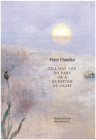
To provide a brief synopsis, Beckett's play is about a sixty-nine year old man who, every year on his birthday, tapes his reflections and events of the previous year. This birthday he is listening to a tape of himself thirty years ago and thus unravels the complexity of this character. Handke echoes this monologue structure in that he begins with an angry woman and ends with the woman realizing that perhaps her and Krapp are simpatico, are really lovers until the end.
There are so many great passages in this monologue which is only thirty-two pages long, it would difficult to choose the highlights. They are all highlights. And speaking of simpatico, Mike Mitchell has been translating Handke for such a long time that there is not one misstep in capturing Handke's prose and character. Seagull Books publishes this piece and chose to include the German and French version following the translation which I always think is interesting whether I understand that language or not.
Till Day Do You Part or A Question of Light is a great riff on Beckett that just so happened to turn out brilliantly. It would be really intriguing to see these pieces performed together. Even though I haven't reviewed any Handke, I am a huge fan and this is a perfect treat for any fan. Beckett lovers will surely not be disappointed either. Handke embodies the voice of a woman and I can't help but be impressed by that. This monologue deserves an audience.
Till Day Do You Part or A Question of Light
By Peter Handke
Translated by Mike Mitchell
Seagull Books
Hardcover, 103 pp.
ISBN: 9781906497736
$17.95
For the dark, gloom-ridden person was, perhaps is me, me, the woman here. My act now? No, in my night I never needed to act. You, you're the master actor, world champion at broad-daylight acting. No one can compete with you in that, no one, never. But I can be your audience. 'I can put up with being ignored,' another woman once said to another man. Accordingly I join you in my signless night, stammer vaguely to myself and at the same time I feel the urge to sing my stammering, the refrain to the song you're humming of the shadow creeping down our mountains, of the azure sky growing dull, of the noise ebbing from the countryside around us, of our sleep in the coming peace. And I'm singing my stammered echo now, singing my joyful anger as a treble clef, just as you're singing your serene lack of illusion. I wonder if that adds up to a duet?Heads up, actresses, use Till Day Do You Part or A Question of Light as a monologue source. Fashioned as a female response to the woman referred to in Beckett's one-act play, Krapp's Last Tape, this is Peter Handke doing what he does so well. His ability to distill emotion fits perfectly for the ups and downs of this monologue. I haven't read Krapp's Last Tape or ever seen it, but from other Beckett works I have read, I see the similarity in their incisive voice and use of language.
To provide a brief synopsis, Beckett's play is about a sixty-nine year old man who, every year on his birthday, tapes his reflections and events of the previous year. This birthday he is listening to a tape of himself thirty years ago and thus unravels the complexity of this character. Handke echoes this monologue structure in that he begins with an angry woman and ends with the woman realizing that perhaps her and Krapp are simpatico, are really lovers until the end.
There are so many great passages in this monologue which is only thirty-two pages long, it would difficult to choose the highlights. They are all highlights. And speaking of simpatico, Mike Mitchell has been translating Handke for such a long time that there is not one misstep in capturing Handke's prose and character. Seagull Books publishes this piece and chose to include the German and French version following the translation which I always think is interesting whether I understand that language or not.
Till Day Do You Part or A Question of Light is a great riff on Beckett that just so happened to turn out brilliantly. It would be really intriguing to see these pieces performed together. Even though I haven't reviewed any Handke, I am a huge fan and this is a perfect treat for any fan. Beckett lovers will surely not be disappointed either. Handke embodies the voice of a woman and I can't help but be impressed by that. This monologue deserves an audience.
Till Day Do You Part or A Question of Light
By Peter Handke
Translated by Mike Mitchell
Seagull Books
Hardcover, 103 pp.
ISBN: 9781906497736
$17.95
Theater im Krastal: Zwei Weltautoren und ihr Kunstgriff
13. Juli 2015, 11:06
Das Theater im Krastal mit Samuel Beckett und Peter Handke
Klagenfurt – Das letzte Wort hat die Frau. Und Peter Handke war 2007 klug beraten, seine Namenlose im Monolog "Bis dass der Tag euch scheidet" dem alternden Schriftsteller Krapp aus Samuel Becketts "Das letzte Band"zurufen zu lassen: "Mit diesem Echo hast du nicht gerechnet!" Es stimmt einfach. Aber entschuldigend für Beckett und seinen Krapp wäre vielleicht zu sagen, dass sie den Steinbruch Krastal nicht kannten. Diese wildromantische Kulisse nahe bei Treffen am Ossiacher See schreit natürlich nach einem Echo. Und wenn Beckett und sein sarkastisches Alter Ego sie gekannt hätten, hätten sie eher damit gerechnet, dass hier kein Krapp'scher Hall ohne Nachhall bleibt.
Nach fünf erfolgreichen Sommern lädt der Schauspieler Manfred Lukas-Luderer, bühnenbewährt vom Burgtheater bis zum Schauspielhaus Zürich, bis 8. August jeden Donnerstag, Freitag und Samstag heuer letztmals zu einer Produktion in den Steinbruch, den er für das Theater entdeckt hat. Gespielt werden die beiden genannten Monologe, die sich auch als "zeitversetzter Dialog" verstehen lassen, wie Handkes weibliche Monologfigur das Publikum gezielt in die Irre führt.
Denn das Entscheidende an Becketts "Letztem Band"ebenso wie an Handkes "Bis dass der Tag euch scheidet"ist nicht so sehr der Stellungskrieg zwischen einem Mann und einer Frau; es ist vielmehr der Sarkasmus und die fast schon lebensendzeitliche Radikalität, mit der zwei Weltautoren mit zwei verschiedenen Kunstgriffen sich selbst nicht als Schriftsteller, aber als soziale Wesen infrage stellen.
Manfred Lukas-Luderer selbst verkörpert den Krapp, der über Stapeln voll alter Zeitungen an seinem Tonband sitzt, egomanisch seine Erlebnisse archivierend, revidierend und verurteilend – wie sollte er sonst sein Material sichten? Fast masochistisch hat Beckett sein Ebenbild noch zusätzlich denunziert als Kneipenhocker, bananenmampfenden Affen und lallenden Greis. Phänomenal authentisch macht Lukas-Luderer im Steinbruch da schon klar, dass es um das Versagen des Künstlers als Mensch geht.
Das Waisenkind
Aber Isabella Wolf, Lebenspartnerin von Lukas-Luderer, setzt mit dem Handke-Monolog genauso authentisch noch eines drauf: "Du warst nicht Schöpfer genug." Peng! Du hast mit dem Arm wie ein Kind um dich gezeigt, auf nichts. Und die Frau, die du gerettet haben willst, die Frau auf dem Nachen im Schilf, du hast sie sich nicht einmal bewegen lassen, sondern in deine Regale eingeordnet wie einen literarischen Stoff.
Und dann, zwischen Regale gepfercht, nennt Wolf ihren Autor ein Waisenkind – und man erinnert sich, dass es eigentlich Handke war, der vaterlos aufgewachsen ist, und es wird klar, dass an diesem sehr schlichten, aber auch sehr besonderen Abend zwei Literaten, wenn nicht auch noch zwei Theaterkünstler auf beklemmende Art in ihren ureigensten Lebenswunden bohren. (Michael Cerha, 13.7.2015)
http://derstandard.at/2000019007321/Theater-im-Krastal-Zwei-Weltautoren-und-ihr-Kunstgriff
"Chicquita abracas a todos"
>
MICHAEL ROLOFF
>
>
>
MICHAEL ROLOFF
>
>





 Posts
Posts

